Showing posts with label proton. Show all posts

Friday, February 18, 2011

Proton Persona to contest in BTCC

Welch Motorsport to enter an NGTC-spec Persona


Welch Motorsport, a prominent player in the British motorsport scene has been planning a British Touring Car Championship (BTCC) race car based on the Proton Persona and it will comply with the Next Generation Touring Car specifications.

Although work is already some way down the road, the team believe that they can only take part in the second half of this year’s Dunlop MSA British Touring Car Championship.


Team Principal, John Welch is hopeful that the car, to be driven by 27-year-old son Daniel, will make its debut at Snetterton in early August when the BTCC season recommences after a summer break.

He also said that the NGTC Persona will be powered by TOCA’s unbranded turbocharged NGTC engine and not Proton’s own engines.

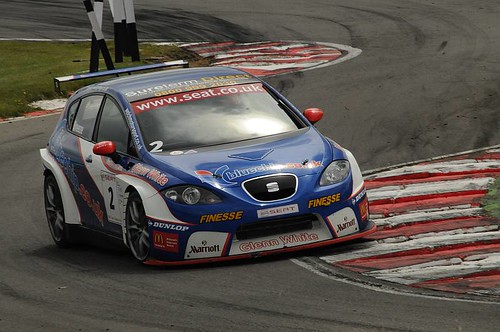
Welch Motorsports Seat Leon


“We are scheduled to take delivery of the Proton road car today (Wednesday) to begin the process of building it into a BTCC car – so the realistic target is to come into the series in the second half of the season with a longer-term ambition of running two cars.

“Obviously it’s a very different challenge but in recent years we’ve come up against grids of 30 or 40 cars in the SEAT Leon Eurocup and been right at the sharp end, so have learnt something about making a saloon car go quickly.

“Daniel would be one of the quick youngsters coming in. He’s been very quick in everything he’s driven since he was seven years old – he lives and breathes motor racing and has always been fully involved on the engineering side so is a proper all-round competitor. I’m confident he really has the ability to cut it in the BTCC,” James said.

The 2011 BTCC season will kick on on April 3 at Brands Hatch and the calendar will tour 10 races throughout the year.

The BTCC is known as one of the most competitive touring car series in the world.

Apart from the BTCC, Proton is also taking part in the International Rally Challenge with their Satria Neo S2000, which is campaigned by Mellors Elliot Motorsport. The car finished in first and second at the China leg of the Asia Pacific Rally Championship.

Lotus vs Lotus - Proton says Tony’s demands are unreasonable

Settlement offer includes returning Team Lotus name to Group Lotus but does not prevent Tony from using it in F1, subject to terms


While 1Malaysia Racing Team (1MRT) boss Tony Fernandez told AFP that the GBP6 million offer Group Lotus made for the Team Lotus name was too small, the other side says that it is fair compensation for the purchase price of Team Lotus Ventures, the company that allegedly had the rights to the name.

In a statement, Group Lotus parent company, Proton Holdings Berhad said that for all intents and purposes, 1MRT cannot now demand for Group Lotus to compensate them for a problem, which they got themselves into.


“1MRT entered into a relationship with Team Lotus Ventures with full prior knowledge that Group Lotus are already in a long standing legal dispute with Team Lotus Ventures.

Group Lotus and Proton have always held the view that this matter should be resolved as soon as possible in the interests of Formula 1 and the fans. Thus, we remain open to reasonable and justified proposals.

According to Proton, in November 2010, 1MRT proposed a settlement of between GBP22mil to GBP37mil which included the purchase of the Team Lotus name (purportedly for GBP5mil) and other indirect costs that they have incurred such as development of a new brand, loss of income from produced merchandise, loss of sponsorship etc.

“We agreed to only consider paying for the Team Lotus name subject to due diligence being conducted and not be made responsible for the indirect costs which could have been avoided by 1MRT

“Our proposed settlement sum was to settle only the purchase price, allegedly GBP 5million for the "Team Lotus" name, subject to due diligence and confirmation from 1MRT and other related parties including Team Lotus Ventures and David Hunt.

“Once settlement is agreed by both parties, the "Team Lotus" name shall unequivocally vest with Group Lotus.

“From our perspective, this is fair as 1MRT could have continued to use the "Lotus Racing" and not incur additional charges allegedly in excess of GBP30 million for the establishment of a new team.

“PROTON and Group Lotus cannot be made liable for their commercial misadventure.


Earlier in the week Fernandez told AFP that he has rejected the out of court settlement worth GBP6 million offered by Group Lotus.

“It was six million pounds for an out-of-court settlement. Of course I would like to end it but the proposal by Proton would have bankrupted the company. We could not accept it,” the AirAsia chief told AFP, adding that 250 jobs and huge investments by shareholders are at stake.

Fernandez had bought the rights to Team Lotus from David Hunt, brother of former F1 World Champion James who had bought the defunct team some 13 years ago.

The decision to purchase the team came on the tail of Proton’s decision to terminate the licensing agreement with Fernandez.

Proton had cited multiple breach of contract and refusal to cooperate as the reason for terminating the licensing agreement.

Monday, March 24, 2008

New Proton Video


New Proton Video


New Proton

The Proton Saga is the first car produced by Malaysian auto manufacturer Proton. Originally based on the 1983 Mitsubishi Lancer Fiore, the Saga first debuted in September 1985 and retained its core design for two decades, before a successor designed in-house by Proton was launched to replace the aging platform in 2008. The Saga is currently the longest surviving model produced by Proton, soldiering on for nearly 22 years.


Since 1985, the Proton Saga and its variants contributed to most of Proton's sales and revenues. The saloon variants of the car are also popular among Malaysian taxi drivers and operators who need cheap vehicles with good fuel economy


Saga (1985–1991)


The Proton Saga was launched in September 1985 by Malaysia's Prime Minister at that time, Tun Dr. Mahathir bin Mohamad. Before the production of Proton Saga, a contest was held to choose the name of the first national car, and the name Saga was chosen from the winner of the contest. The winner of the contestant was Ismail Jaafar[1], a retired military soldier. When asked why he chose this particular name, he replied as "saga" (Abrus precatorius) is a type of seed commonly found in Malaysia, and that the Proton Saga is as strong as the saga seed.


The first Proton Saga that rolled off the production line was presented to the Malaysian National Museum as a symbol of the beginning of the Malaysian automotive industry. Tun Dr. Mahathir also used a new Proton Saga to cross Penang Bridge during the opening ceremony of the bridge on 14 September 1985.


Early Saga models were powered by SOHC 8-valve 4-cylinder petrol engines sourced from Mitsubishi, available in both 1.3- and 1.5-litre displacements. Both engines were available with a 5-speed manual transmission, but a 3-speed Mitsubishi Tri-matic automatic was available with the 1.5-litre engine in 1990.


The Saga was originally offered as a 4-door sedan, followed by the addition of a hatchback variant, introduced in 1988 as the Proton Knight and was later know as Saga Aeroback. The Proton Knight was designed for the European market as the hatchback was more popular in United Kingdom.


In 1989, Proton sold the Saga in the United Kingdom with the slogan Japanese Technology, Malaysian Style. Since then, United Kingdom contributes most of Proton's export sales. The Saga name was not used and it was simply known as the Proton 1.3 or 1.5. The UK models reverted to the dashboard used in the Mitsubishi Lancer, complete with HVAC controls not found in the domestic model.


In 1990, the line-up was revised with the introduction of 12-valve Megavalve engines, which increased power ratings to 75 bhp (56 kW) (from the original 70.5 bhp (53 kW) in the former 8-valve (Magma) version[2]) for the 1.3-litre engine, and 90 bhp (67 kW) for the 1.5-litre engine. On domestic models, the Saga also gained the "Megavalve" moniker. Minor exterior modifications included a new grill and wraparound black trim pieces. In addition, rear seat belts and a third brake light were fitted as standard.


Saga Iswara (1992–2008)


In 1992, the Saga was given a facelift and its name expanded as Proton Saga Iswara (also known in short as Proton Iswara), after a species of butterfly in Sarawak. Modifications included slimmer headlights, plastic bumpers, side mouldings, coloured door handles, grooved taillight clusters and rear number plate repositioned to the bumper. This particular model is used as taxis in Malaysia and some are converted to NGV. Due to the modification, boot space was reduced by half to accommodate the NGV tank and there are only a few petrol stations by Malaysian oil-giant Petronas in the Klang Valley that sell natural gas, although there are plans underway to increase the number of stations selling it at various locations around Kuala Lumpur.


Models exported to Singapore and the United Kingdom were available with multi-point fuel injection and catalytic converters to meet Euro I emissions standards. This model was known as the Proton MPi in the United Kingdom. The introduction of the Proton Persona in 1993 replaced the corresponding models in the Saga range in the United Kingdom and this continued until the entire range was replaced in 1996.


In 2001, to regain sales and be competitive with Perodua, Proton introduced a special edition of Saga Iswara Sport based on the Aeroback version which included a new bodykit, jewel-effect headlights and Altezza lights, among other changes. It was only available in silver, with a manual transmission and a 1.3-litre engine. The original Saga Iswara Aeroback was still available in a 1.5-litre engine.


While the Iswara Aeroback underwent further modifications in the domestic market to become the Saga LMST in 2003, the saloon variant remained on sale unchanged.


Saga (2003–2008)


As a loose successor to the Saga Iswara Sport, Proton gave the Iswara a new facelift and renamed it back to Saga (or know as Saga LMST by local car community) in 2003. The interior has an entirely new dashboard, door panels and an instrument panel with a digital display consisting of an odometer, a fuel gauge and a temperature gauge. Meanwhile, the exterior received new headlights and taillights and colour-coded bumpers and wing mirrors. Proton retuned the 1.3-litre carburettor engine, and fitted a new exhaust system, increasing its power rating to 83 bhp (62 kW). It is only available with the 5-speed manual transmission.


On 5 March, 2007, Proton launched the 50th Merdeka Anniversary Promotion in Malaysia, where the announced new price of the Proton Saga at that time was RM26,999. The promotion was made as a support to Malaysia's 50th Merdeka Day and also to thank Proton's customers for their support since Proton Saga was first launched,[3] receiving several minor cosmetic changes. The move was also an attempt by Proton to steal potential sales from Perodua's then-forthcoming budget supermini, the Viva. That year, the Proton Saga became the second best selling car behind Perodua MyVi and the best selling saloon car in Malaysia, with over 15,000 orders.


Second generation (2008-)


On the 18th of January 2008, Proton unveiled the long-awaited successor to the original car, which will be phased out in June of the same year. Retaining the Saga name, the new car is an indigenous design, essentially based on a stretched Proton Savvy platform.


The new Saga is powered by the same 1.3-litre Campro engine (which was co-designed with Lotus) that is fitted to entry-level Gen-2s. However, it has a new Integrated Air-Fuel Module (IAFM) which varies the airflow into the engine to improve efficiency, smoothening out the problematic dip in the torque curve in the lower and middle rev ranges. The car feels peppy to drive and acceleration to highway speeds is good. It boasts the biggest boot space in its class (413 liters).


Because the new Saga, like its predecessor, is expected to be popular amongst Malaysian taxicab operators, the car is designed to accommodate a compressed natural gas tank without considerably restricting boot space.


The new Saga will be the cheapest Proton once the RM26,999 original is retired[citation needed] in June 2008. Pricing varies between RM31,500 and RM39,800, which led Proton to dub the new Saga as "The People's Car".


As of February 2008, approximately 23,000 customer bookings had been made for the car since its launch (18th January 2008) and the corresponding waiting time for delivery during that same period stretched up to 5 months

New Proton

The Proton Saga is the first car produced by Malaysian auto manufacturer Proton. Originally based on the 1983 Mitsubishi Lancer Fiore, the Saga first debuted in September 1985 and retained its core design for two decades, before a successor designed in-house by Proton was launched to replace the aging platform in 2008. The Saga is currently the longest surviving model produced by Proton, soldiering on for nearly 22 years.


Since 1985, the Proton Saga and its variants contributed to most of Proton's sales and revenues. The saloon variants of the car are also popular among Malaysian taxi drivers and operators who need cheap vehicles with good fuel economy


Saga (1985–1991)


The Proton Saga was launched in September 1985 by Malaysia's Prime Minister at that time, Tun Dr. Mahathir bin Mohamad. Before the production of Proton Saga, a contest was held to choose the name of the first national car, and the name Saga was chosen from the winner of the contest. The winner of the contestant was Ismail Jaafar[1], a retired military soldier. When asked why he chose this particular name, he replied as "saga" (Abrus precatorius) is a type of seed commonly found in Malaysia, and that the Proton Saga is as strong as the saga seed.


The first Proton Saga that rolled off the production line was presented to the Malaysian National Museum as a symbol of the beginning of the Malaysian automotive industry. Tun Dr. Mahathir also used a new Proton Saga to cross Penang Bridge during the opening ceremony of the bridge on 14 September 1985.


Early Saga models were powered by SOHC 8-valve 4-cylinder petrol engines sourced from Mitsubishi, available in both 1.3- and 1.5-litre displacements. Both engines were available with a 5-speed manual transmission, but a 3-speed Mitsubishi Tri-matic automatic was available with the 1.5-litre engine in 1990.


The Saga was originally offered as a 4-door sedan, followed by the addition of a hatchback variant, introduced in 1988 as the Proton Knight and was later know as Saga Aeroback. The Proton Knight was designed for the European market as the hatchback was more popular in United Kingdom.


In 1989, Proton sold the Saga in the United Kingdom with the slogan Japanese Technology, Malaysian Style. Since then, United Kingdom contributes most of Proton's export sales. The Saga name was not used and it was simply known as the Proton 1.3 or 1.5. The UK models reverted to the dashboard used in the Mitsubishi Lancer, complete with HVAC controls not found in the domestic model.


In 1990, the line-up was revised with the introduction of 12-valve Megavalve engines, which increased power ratings to 75 bhp (56 kW) (from the original 70.5 bhp (53 kW) in the former 8-valve (Magma) version[2]) for the 1.3-litre engine, and 90 bhp (67 kW) for the 1.5-litre engine. On domestic models, the Saga also gained the "Megavalve" moniker. Minor exterior modifications included a new grill and wraparound black trim pieces. In addition, rear seat belts and a third brake light were fitted as standard.


Saga Iswara (1992–2008)


In 1992, the Saga was given a facelift and its name expanded as Proton Saga Iswara (also known in short as Proton Iswara), after a species of butterfly in Sarawak. Modifications included slimmer headlights, plastic bumpers, side mouldings, coloured door handles, grooved taillight clusters and rear number plate repositioned to the bumper. This particular model is used as taxis in Malaysia and some are converted to NGV. Due to the modification, boot space was reduced by half to accommodate the NGV tank and there are only a few petrol stations by Malaysian oil-giant Petronas in the Klang Valley that sell natural gas, although there are plans underway to increase the number of stations selling it at various locations around Kuala Lumpur.


Models exported to Singapore and the United Kingdom were available with multi-point fuel injection and catalytic converters to meet Euro I emissions standards. This model was known as the Proton MPi in the United Kingdom. The introduction of the Proton Persona in 1993 replaced the corresponding models in the Saga range in the United Kingdom and this continued until the entire range was replaced in 1996.


In 2001, to regain sales and be competitive with Perodua, Proton introduced a special edition of Saga Iswara Sport based on the Aeroback version which included a new bodykit, jewel-effect headlights and Altezza lights, among other changes. It was only available in silver, with a manual transmission and a 1.3-litre engine. The original Saga Iswara Aeroback was still available in a 1.5-litre engine.


While the Iswara Aeroback underwent further modifications in the domestic market to become the Saga LMST in 2003, the saloon variant remained on sale unchanged.


Saga (2003–2008)


As a loose successor to the Saga Iswara Sport, Proton gave the Iswara a new facelift and renamed it back to Saga (or know as Saga LMST by local car community) in 2003. The interior has an entirely new dashboard, door panels and an instrument panel with a digital display consisting of an odometer, a fuel gauge and a temperature gauge. Meanwhile, the exterior received new headlights and taillights and colour-coded bumpers and wing mirrors. Proton retuned the 1.3-litre carburettor engine, and fitted a new exhaust system, increasing its power rating to 83 bhp (62 kW). It is only available with the 5-speed manual transmission.


On 5 March, 2007, Proton launched the 50th Merdeka Anniversary Promotion in Malaysia, where the announced new price of the Proton Saga at that time was RM26,999. The promotion was made as a support to Malaysia's 50th Merdeka Day and also to thank Proton's customers for their support since Proton Saga was first launched,[3] receiving several minor cosmetic changes. The move was also an attempt by Proton to steal potential sales from Perodua's then-forthcoming budget supermini, the Viva. That year, the Proton Saga became the second best selling car behind Perodua MyVi and the best selling saloon car in Malaysia, with over 15,000 orders.


Second generation (2008-)


On the 18th of January 2008, Proton unveiled the long-awaited successor to the original car, which will be phased out in June of the same year. Retaining the Saga name, the new car is an indigenous design, essentially based on a stretched Proton Savvy platform.


The new Saga is powered by the same 1.3-litre Campro engine (which was co-designed with Lotus) that is fitted to entry-level Gen-2s. However, it has a new Integrated Air-Fuel Module (IAFM) which varies the airflow into the engine to improve efficiency, smoothening out the problematic dip in the torque curve in the lower and middle rev ranges. The car feels peppy to drive and acceleration to highway speeds is good. It boasts the biggest boot space in its class (413 liters).


Because the new Saga, like its predecessor, is expected to be popular amongst Malaysian taxicab operators, the car is designed to accommodate a compressed natural gas tank without considerably restricting boot space.


The new Saga will be the cheapest Proton once the RM26,999 original is retired[citation needed] in June 2008. Pricing varies between RM31,500 and RM39,800, which led Proton to dub the new Saga as "The People's Car".


As of February 2008, approximately 23,000 customer bookings had been made for the car since its launch (18th January 2008) and the corresponding waiting time for delivery during that same period stretched up to 5 months